










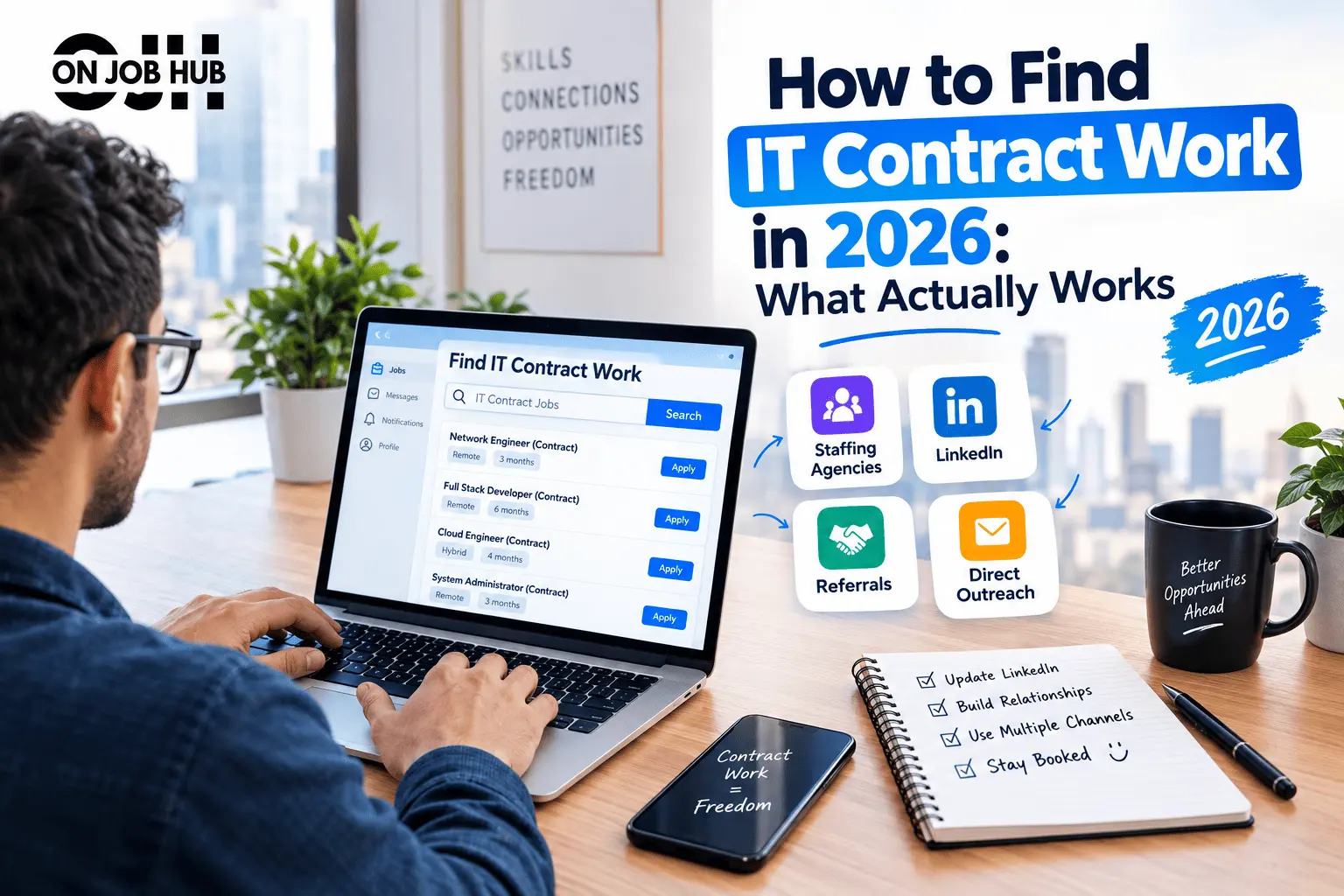
Twenty applications a week. That’s what a lot of IT contractors still do, and it’s roughly the least effective approach out there. Agencies, LinkedIn, referrals, direct outreach — these are where contract work actually comes from now, and the contractors who stay booked are almost always running two or three of those channels at once. If you’ve been searching for how to find IT contract work and coming up short, the issue usually isn’t effort. It’s which channels you’re using. This guide breaks down how to find IT contract work using the channels that actually produce results in 2026.
How to Find IT Contract Work: The Short Version
Finding IT contract work isn’t really one activity. It’s a mix of visibility (recruiters and clients being able to find you), relationships (people who already trust your work), and timing (being available and top of mind when a role opens). Most people treat it as a job-search problem, when really it’s closer to running a small pipeline that needs occasional maintenance, even between contracts.
How to Find IT Contract Work, Step by Step
You start by making yourself findable — an updated LinkedIn profile, a couple of agency relationships, maybe a small portfolio if you’re technical. From there, most contract work flows through one of a few channels: an agency reaches out with a role, a recruiter finds your profile directly, a past client refers you, or you approach a company yourself.
A simple example: a network engineer looking for how to find IT contract work after a project ends might spend the first week reconnecting with two former recruiters, updating their LinkedIn headline with current skills, and reaching out to one past client just to say hello. By week three, one of those recruiters calls with a role that was never posted publicly.
Why This Matters More Than It Used To
Specialized technical roles keep getting harder to fill through traditional job postings alone. Companies want people who can start fast, work independently, and hit the ground running — and increasingly, they’re finding those people through recruiters and referrals rather than open applications. Knowing how to find IT contract work efficiently isn’t just a nice skill anymore. It’s often the difference between staying booked and sitting idle for a month between projects.
The Channels Behind Most of How to Find IT Contract Work in 2026

Staffing agencies. Still the highest-leverage channel, hands down. Agencies carry existing relationships with enterprise clients who’d rather call a trusted recruiter than sort through resumes.
LinkedIn. Recruiters now search it directly for candidates more than they browse job boards. A vague, outdated profile just doesn’t show up in the right searches.
Referrals. A recommendation from someone who’s already worked with you skips a big chunk of the vetting a stranger would go through.
Direct outreach. Slower, but it works when you already have relationships in a specific industry and want to skip the agency markup.
Working Each Channel Well
If you’re looking for a broader overview of How to Find IT Contract Work, this guide can help you understand additional ways to find and secure contract opportunities.
Pick two or three agencies and build a real relationship instead of registering everywhere. Reply fast, be specific about your skills, and stay in touch even when you’re not actively looking — recruiters remember who delivers.
On LinkedIn, ditch the vague headline. Use the actual technologies you work in, since that’s what shows up in a recruiter’s search. Recent project descriptions should be specific too, and staying visible — the odd comment, a short post — keeps you from getting buried.
For referrals, check in on former clients occasionally when you don’t need anything. It makes the eventual ask far less transactional. And for direct outreach, treat it as a supplement to your other channels rather than the whole strategy, since it moves slower on its own.
Spotting a Dead-End Listing Before You Waste Time
Not every posting is real. A vague job description, a listing that’s been up for months, a recruiter who can’t answer basic questions about the client or the budget — these are all warning signs. Before sinking hours into an application, ask how long the role’s been open and whether the budget is confirmed. A surprising number of listings turn out to be resume-collecting exercises.
Staying Booked Between Contracts
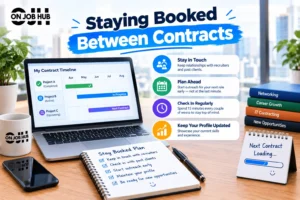
Anyone who’s figured out how to find IT contract work consistently treats sourcing as ongoing, not something to scramble for once a project ends. Jobs for High School Students can also be useful for readers exploring entry-level work and building early career experience.
One habit that helps more than people expect: block fifteen minutes every couple of weeks, even mid-contract, to check in with a recruiter or a former client. Costs almost nothing. Keeps you top of mind.
Common Mistakes That Slow Contractors Down

Applying to everything without any real focus tends to backfire — recruiters notice when a profile doesn’t clearly signal a specialization, which makes placing you harder, not easier. A stale LinkedIn profile is another one; recruiters search it constantly, and an outdated page won’t surface in results.
Some contractors also only network when they’re desperate, which clients can usually sense. And skipping the vetting step — jumping straight into an interview without confirming the role is real and funded — burns time that could go toward a lead worth chasing.
Frequently Asked Questions
How to find IT contract work?
The most reliable way to find IT contract work is combining staffing agencies, an active LinkedIn presence, referrals from past clients, and occasional direct outreach. One channel alone rarely covers enough ground.
Is working with a staffing agency worth it?
Usually yes, especially for enterprise roles that rarely get posted publicly. A couple of solid agency relationships tend to bring in steadier work than applying solo.
How important is LinkedIn if I’m trying to find IT contract work?
Very important. Recruiters search it directly for candidates more than they browse job boards, so a vague or outdated profile can cost you opportunities you’d never even know you missed.
Should I rely only on job boards?
No. They’re one piece of a bigger picture. A lot of the strongest contract roles get filled through agency relationships or direct recruiter outreach before they’re ever posted.
How do I avoid wasting time on fake listings?
Ask how long the role’s been open and whether the budget is confirmed. A recruiter who can’t answer either question is a red flag.
How long does it usually take to find IT contract work?
It varies, but contractors working multiple channels at once — agencies, LinkedIn, referrals — typically land something within a few weeks. Relying on job boards alone tends to stretch that timeline out considerably.
Final Thoughts
If there’s one thing to take from all this, it’s that how to find IT contract work isn’t really about applying harder. It’s about running several channels at the same time and treating relationships as something you maintain year-round, not rebuild every time you need work. Agencies open doors you can’t reach solo. LinkedIn puts you in front of people actively searching for your skill set. Referrals close the loop when someone’s already willing to vouch for you. None of it has to be perfect — it just has to be running.