









If you’ve searched for tongue posture, you’re probably trying to figure out where your tongue should sit when your mouth is relaxed—and whether getting that position right can improve breathing, speech, your bite, or even facial appearance. The short answer is that tongue position is part of normal oral function, but it isn’t a magic way to reshape your face.
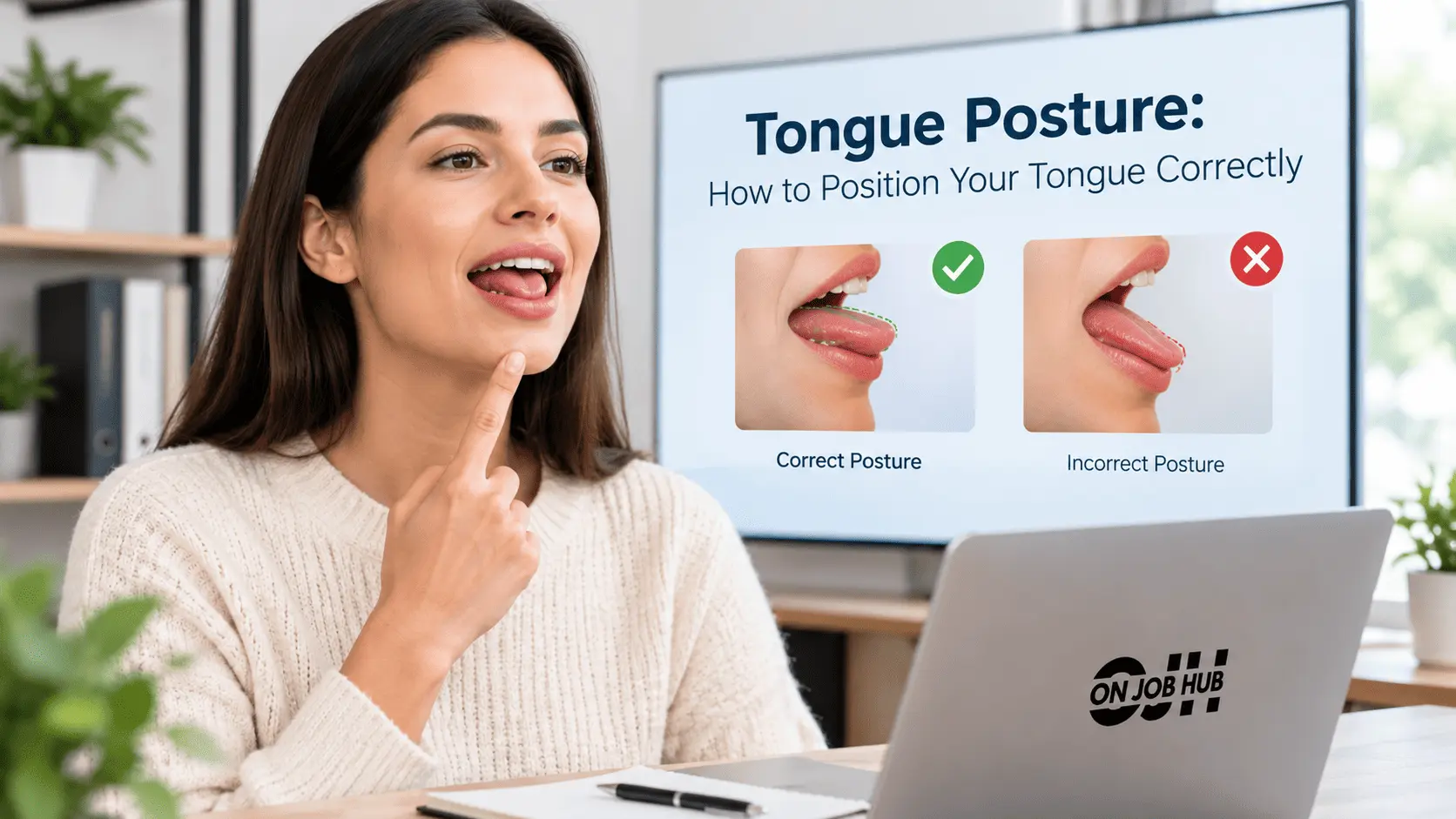
A typical resting posture involves the lips being comfortably closed, nasal breathing, teeth slightly apart, and the tongue resting within the mouth rather than pressing against or between the teeth.
Here’s what proper tongue posture means, how to check it, what can interfere with it, and where popular advice such as “mewing” fits into the evidence.
What Does Proper Tongue Posture Look Like?
At rest, the tongue should be relaxed rather than pushed forcefully against the teeth. The exact position isn’t identical for everyone, but the tongue should generally have a comfortable relationship with the roof of the mouth, teeth, jaw, and surrounding muscles.
According to the American Speech-Language-Hearing Association (ASHA), a typical oral resting posture includes:
- Lips closed without excessive muscle strain
- Breathing through the nose
- Teeth slightly apart
- The tongue resting comfortably inside the mouth
ASHA notes that the tongue tip may rest against the anterior hard palate, near the lower incisors, or overlying gum tissue depending on the individual.
That last point is worth emphasizing because online advice often makes tongue posture sound more rigid than it actually is. You don’t need to force every part of your tongue upward or maintain strong pressure against the palate all day.
Tongue Posture While Speaking and Swallowing
Resting position is only one part of oral function.
Your tongue changes position when you speak, chew, and swallow. During swallowing, for example, the tongue helps create a seal and move food or liquid backward. A pattern in which the tongue repeatedly pushes against or between the teeth is commonly called a tongue thrust. Persistent tongue thrust can be associated with dental changes such as an anterior open bite.
Speech can also be affected when tongue movement or placement is atypical. Sounds involving the tongue, including “s,” “z,” “t,” “d,” and “l,” require precise coordination between the tongue, teeth, palate, and jaw.
Why Does Tongue Posture Matter?
Tongue position matters because the tongue is involved in several everyday functions rather than because it acts as a simple tool for changing facial appearance.
A persistent abnormal resting position may occur alongside other orofacial problems, including open-mouth posture, mouth breathing, atypical swallowing, speech difficulties, and certain dental malocclusions.
The relationship can also work in the other direction. A person may struggle to maintain a comfortable closed-mouth posture because of an underlying airway or structural problem. Allergies, enlarged tonsils, nasal obstruction, a deviated septum, and other issues can interfere with comfortable nasal breathing. ASHA recommends addressing such airway problems rather than simply telling someone to keep their mouth closed.
Can Tongue Position Change Your Face Shape?
This is where online claims often go too far.
You may see posts suggesting that keeping your tongue against the roof of your mouth will dramatically sharpen the jawline, raise the cheekbones, or remodel an adult face. There isn’t good evidence supporting those promises.
The American Association of Orthodontists says there is currently no scientific evidence that the social-media practice known as “mewing” reshapes the jawline or provides the claimed oral-health benefits.
Research also needs to be interpreted carefully. A study of Pakistani adults, for example, found some differences in tongue height between skeletal relationship groups but did not find statistically significant differences in the measured facial growth patterns based on tongue position. It was a relatively small cross-sectional study, so it cannot establish that changing tongue position will change facial structure.
In other words, normal tongue posture is useful for normal function. That’s very different from claiming that deliberate tongue pressure can reliably remodel an adult face.
How to Practice a Comfortable Resting Tongue Position
If you’re simply trying to become more aware of your resting position, start gently.
- Relax your jaw. Your upper and lower teeth don’t need to be clenched.
- Close your lips comfortably. Don’t squeeze them together.
- Breathe through your nose if your nasal airway is clear and comfortable.
- Let your tongue rest inside your mouth. Avoid pushing it hard against your teeth.
- Notice where the tongue tip sits. A comfortable position near the front of the palate or another natural resting position can be normal.
- Swallow normally. Don’t deliberately force your tongue into an exaggerated position.
A useful awareness exercise used in orofacial my functional work is gently placing the tongue tip near the alveolar ridge—the area just behind the upper front teeth—and practicing controlled tongue movements without moving the jaw unnecessarily. ASHA describes tongue-awareness and palatal-seal exercises as part of therapy for appropriate patients.
The goal is coordination and a comfortable habit, not maximum pressure.
Should You Push Your Whole Tongue Against the Roof of Your Mouth?
Not forcefully.
Some online instructions encourage people to create strong suction or continuously press the entire tongue upward. That isn’t necessary simply to establish a healthy resting posture.
Excessive or uneven pressure can be counterproductive. The American Association of Orthodontists specifically warns that improperly forcing the tongue into unnatural positions may contribute to tooth-alignment, bite, jaw-joint, or speech problems.
If an exercise causes pain, jaw tension, clicking, worsening speech, or changes in your bite, stop rather than trying harder.
Signs That Your Tongue or Oral Posture May Need Attention
You don’t need to diagnose yourself from a mirror. However, certain patterns are worth discussing with a qualified professional.
Possible signs include:
- Habitual mouth breathing
- Difficulty keeping the lips comfortably closed
- Tongue resting between or against the front teeth
- A persistent tongue thrust during swallowing
- An interdental lisp or other speech concerns
- Difficulty swallowing
- A noticeable open bite or other bite problem
- Difficulty moving the tongue normally
- Jaw discomfort associated with attempts to change tongue position
ASHA lists abnormal tongue resting posture, mouth-open posture, tongue thrust, certain speech-sound patterns, and dental malocclusions among findings that may occur with orofacial myofunctional disorders.
One possible contributing factor is ankyloglossia, commonly called tongue-tie. A restricted lingual frenulum can limit tongue movement, although not every person with a tongue-tie needs treatment.
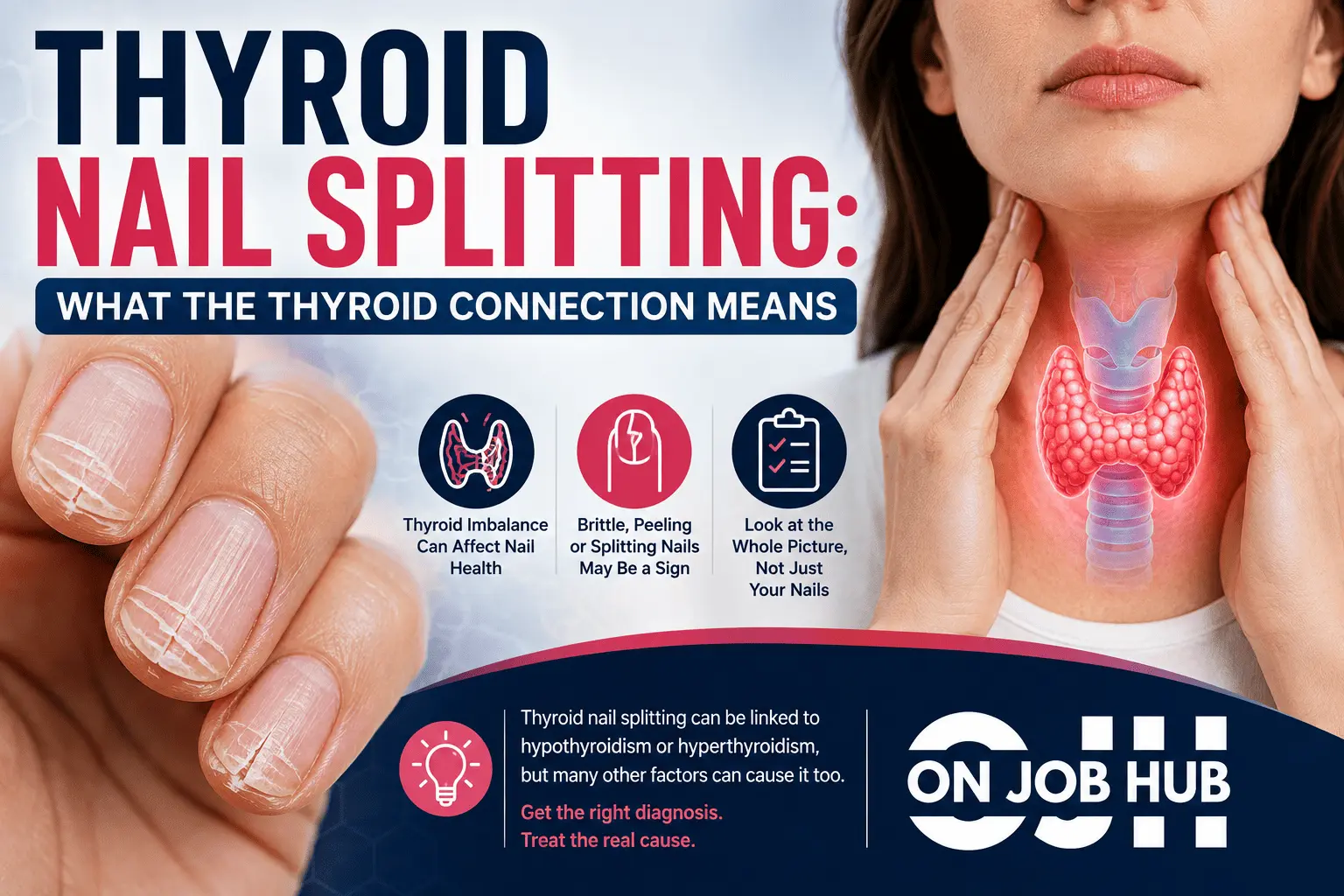
Some oral symptoms can also occur alongside broader health concerns, so persistent or unexplained changes shouldn’t always be attributed to tongue posture alone. For example, thyroid problems can sometimes be associated with changes in the nails and other body systems. You can also learn more about thyroid and nail changes if you’re noticing unusual nail splitting or related symptoms.
What Is Orofacial Myofunctional Therapy?
Orofacial myofunctional therapy (OMT) is a structured approach that addresses movement and resting patterns involving the tongue, lips, jaw, and related muscles.
A trained professional may work on tongue awareness, swallowing patterns, lip closure, nasal breathing, and other functional behaviors depending on the person’s needs. ASHA describes OMT as one potential component of care for orofacial myofunctional disorders.
The evidence isn’t a reason to assume that every person should start tongue exercises. A 2025 scoping review found research on OMT across several conditions, but concluded that its effectiveness still needs stronger evidence.
Similarly, a systematic review of tongue-strengthening exercises found increased tongue pressure after training but rated the evidence as low quality and said it wasn’t possible to conclude that exercises alone consistently improve functional outcomes.
That distinction matters: a targeted therapy plan for a diagnosed functional problem is different from performing internet exercises simply to change your appearance.
Is Mewing the Same as Proper Tongue Posture?
No.
“Mewing” is an online term associated with keeping the tongue against the roof of the mouth, often with claims about jawline definition or facial restructuring. Proper tongue posture, by contrast, refers to the normal resting and functional relationship of the tongue with the rest of the mouth.
There is some overlap in the basic idea of tongue placement, but the goals and claims are different.
The American Association of Orthodontists states that there is no current research showing that mewing provides the jawline or oral-health benefits promoted online. It also warns that excessive pressure or an uneven tongue position may cause unwanted dental or bite changes.
So if your goal is better oral function, focus on comfortable posture and proper assessment—not forcing your tongue into a particular position because a social-media video promises a sharper face.
When Should You See a Dentist or Specialist?
Consider getting an evaluation if your tongue position is accompanied by persistent mouth breathing, swallowing difficulties, speech problems, dental changes, or trouble keeping your lips closed comfortably.
Depending on the problem, evaluation may involve a dentist, orthodontist, speech-language pathologist, or an ear, nose, and throat (ENT) specialist. Different professionals look at different parts of the problem.
For example, an orthodontist can assess tooth and jaw relationships, while a speech-language pathologist with relevant training can evaluate oral movement and swallowing patterns. If nasal obstruction is preventing comfortable nasal breathing, an ENT evaluation may be appropriate. ASHA specifically notes that airway issues may need to be identified and addressed before a stable closed-mouth resting posture can be established.
Don’t assume that a restricted tongue automatically means you need a procedure, either. Treatment should be based on function and clinical findings rather than an internet checklist.
Frequently Asked Questions
What is the correct tongue posture at rest?
A typical resting pattern includes relaxed lips, nasal breathing, slightly separated teeth, and the tongue resting comfortably inside the mouth. The precise tongue-tip position can vary between people.
Should my tongue touch the roof of my mouth?
It can make contact with the palate as part of a normal resting or functional pattern, but you shouldn’t need to apply excessive pressure. Comfort and normal oral function matter more than maintaining a rigid position.
Can tongue posture change your jawline?
There is no strong evidence that deliberately changing tongue posture can reliably reshape an adult jawline. Claims made around mewing go beyond the available evidence.
Can adults improve their tongue posture?
Adults can work on oral habits and movement patterns when a functional problem has been identified. Depending on the cause, treatment may involve exercises, orofacial myofunctional therapy, dental or orthodontic treatment, or evaluation of an airway problem.
Is mouth breathing related to tongue posture?
It can be. Open-mouth posture and mouth breathing can affect the resting relationship of the tongue, lips, and jaw. However, simply forcing the mouth closed isn’t the solution if nasal obstruction or another airway problem is present.
What is tongue thrust?
Tongue thrust describes a swallowing pattern in which the tongue pushes against or between the teeth. Persistent tongue thrust can contribute to dental changes, including an anterior open bite.
How long does it take to improve tongue posture?
There isn’t one reliable timeline. It depends on why the posture is abnormal, how long the pattern has existed, the person’s anatomy, and whether treatment is needed. A professional assessment is more useful than a fixed online timetable.
Final Thoughts
Good tongue posture is primarily about normal oral function, not creating a particular facial shape. A relaxed tongue, comfortable lip closure, nasal breathing, and appropriate coordination during swallowing and speech are more meaningful goals than forcing the tongue upward all day.
If you’re noticing mouth breathing, tongue thrusting, speech changes, swallowing difficulty, or bite problems, don’t try to correct everything through aggressive exercises. Finding the underlying cause—and getting the right professional evaluation when necessary—is a safer and more useful starting point.