










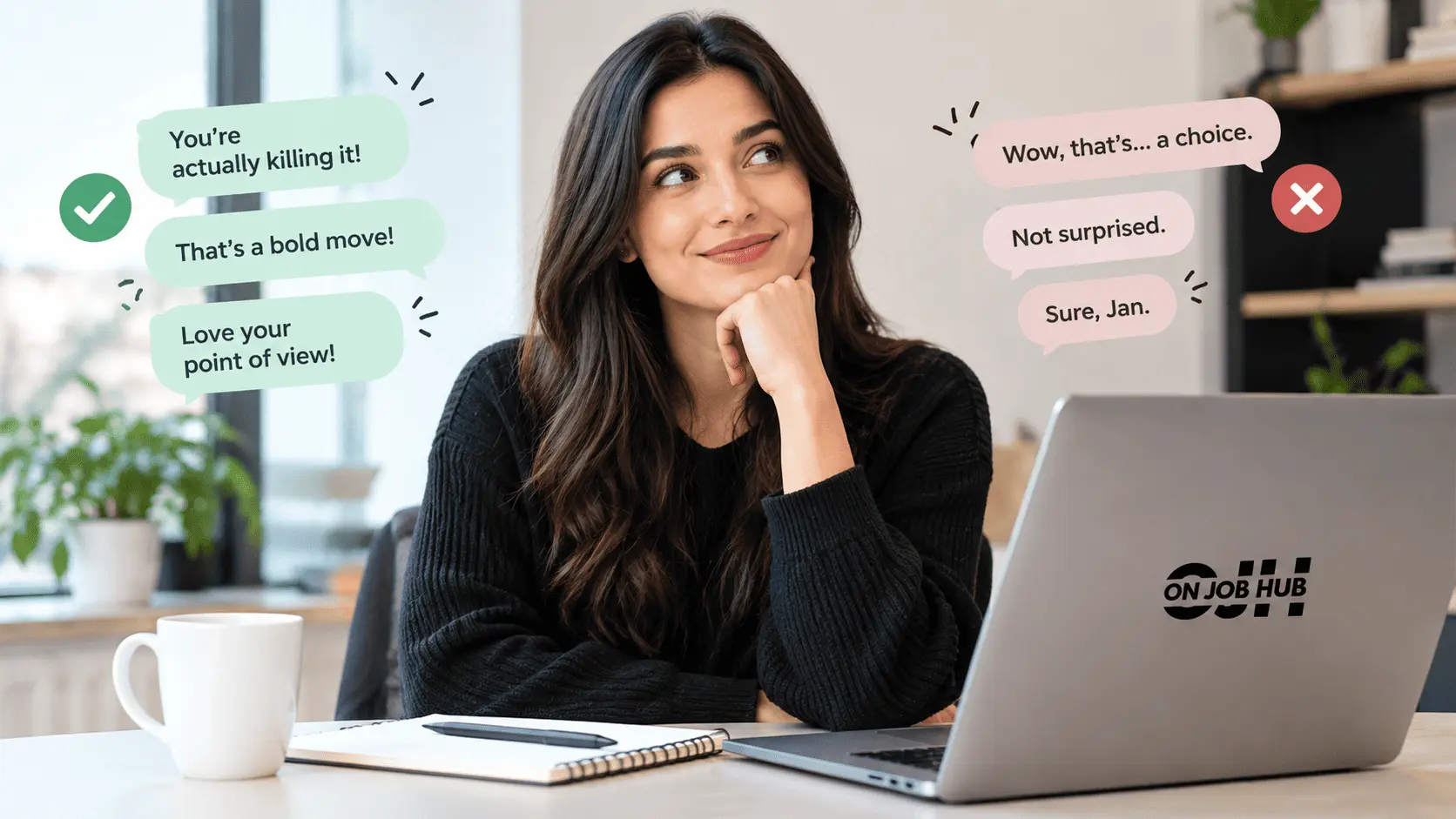
Someone leaves a smug remark under your post, or a friend texts something that deserves better than “lol.” You want a reply with a little spice, not a fight. This guide to Examples of Sassy Comments gives you replies you can use or adapt, sorted by situation, along with the reasoning behind why they work. Sass is a tone more than a vocabulary. The same line can sound playful from one person and hostile from another, so we’ll also cover timing, audience, and where the line sits. Skip ahead to the examples if you’re in a hurry, but the tone advice is what keeps a good line from landing badly.
What Are Examples of Sassy Comments?
Sassy comments are short, confident replies that mix humor, mild attitude, and a hint of cheek, aimed at teasing or deflecting rather than wounding. Think of a raised eyebrow turned into words. The speaker sounds self-assured, a little playful, and usually in control of the exchange.
The best Examples of Sassy Comments demonstrate the difference between playful wit and outright rudeness. A witty remark can be neutral. A rude one is meant to hurt. A sassy one pokes but leaves the other person room to laugh along. That distinction matters because most failed sass comes from crossing into the second category by accident.
Examples of Sassy Comments by Situation
These Examples of Sassy Comments work best when you deliver them with a light touch. Adjust the wording so it sounds like you.
Replying to a backhanded compliment
“Thanks! I’ll take that as a compliment, since you clearly meant it as one.”
“Wow, that was almost nice. Practice makes progress.”
“Funny, I wasn’t aware I’d asked for a review.”
Under social media posts and comments
“Bold opinion for someone who didn’t read the caption.”
“I’d explain it, but I left my crayons at home.” (Use carefully. This one is closer to the edge.)
“Your comment is very you.”
“Noted. Filed under things I’ll never think about again.”
When someone questions your choices
“I appreciate the concern. Not enough to change anything, but I appreciate it.”
“Interesting theory. Mine has better results.”
“You’re welcome to your opinion. I’m just not renting space for it.”
In texts with friends
“Sorry, my reply is stuck in traffic behind your bad idea.”
“That’s a lot of confidence for someone who’s been wrong since Tuesday.”
“Love the energy. Wrong direction, but love it.”
Playful or flirty sass
“You’re trouble. Good thing I look great in it.”
“Careful. I’m hard to impress and even harder to forget.”
“Bold of you to assume I was waiting by the phone.”
For a lighter, workplace-safe version
“Happy to take that on, once the budget catches up with the ambition.”
“Great idea. Who’s volunteering to own it?”
“Sure, I can do it fast, cheap, or good. Pick two.”
These Examples of Sassy Comments have something important in common: almost none attack a person’s appearance, background, or personal life. They target a claim, a situation, or a bit of overconfidence.
Why Sassy Comments Matter in 2026
Most of us now spend more time replying in text than speaking. Comment sections on Instagram, TikTok, X, and LinkedIn are where tone gets judged fast, and one flat reply can read as cold or passive-aggressive. A bit of personality helps you stand out, deflect annoying remarks, and keep a conversation lively.
Brands noticed this years ago. Social media managers regularly use a sassy tone on accounts aimed at younger audiences, since a quick, humorous reply tends to get shared more than a corporate non-answer. However, platforms also moderate harassment, so a reply that tips into abuse can get reported or removed. The most effective Examples of Sassy Comments stay on the friendly side of that line.
What Makes a Sassy Comment Work
Four things show up in nearly every good one:
Brevity. If you need two sentences to set it up, you’ve lost the beat.
Confidence. Hedging kills sass. “Maybe I’m wrong, but kind of…” isn’t sassy.
A specific target. Poke at what was said, not who the person is.
A hint of warmth. Often it’s just a smile in the phrasing, which signals you’re joking.
How to Write Your Own Sassy Comments
Memorizing lines only goes so far. You’ll get better results building replies on the spot. Here’s a simple way to develop your own Examples of Sassy Comments for everyday conversations.
Find the claim or assumption. What did they actually say or imply? That’s your raw material.
Take it a step further. Exaggerate it, flip it, or take it literally. “You should really exercise more” becomes “I do. I run from responsibilities daily.”
Cut it down. Delete the first half. Most replies get sharper at 8 to 12 words.
Check the room. Who will see this? A reply that works in a group chat with close friends might not work in a public thread or on your boss’s feed.
Wait a beat before sending. Thirty seconds is often enough to notice that a line is meaner than you meant.
The goal is to develop a voice that sounds like you on a good day, not like a stand-up bit someone else wrote.
Sassy vs. Sarcastic vs. Rude
People mix these up constantly, and it’s where most social misfires begin.
| Style | Intent | Typical Effect |
|---|---|---|
| Sassy | Playful, confident, teasing | Gets a laugh or a smirk |
| Sarcastic | Says the opposite of what’s meant | Can be funny or cutting, depending on tone |
| Rude | Insult or dismiss | Ends the conversation or starts a fight |
Sarcasm is a tool that sass sometimes borrows, but sarcasm alone can read as bitter, especially in text where tone disappears. When reviewing Examples of Sassy Comments, imagine saying each line with a grin to someone you like. If it still works, you’re probably fine.
Common Mistakes to Avoid
Punching down. Sass aimed at someone with less power, or at a sensitive trait, stops being funny quickly. Pick targets that can take it.
Using it with the wrong audience. A client, a new coworker, or a relative who’s never heard your humor may take it literally. Save the spice for people who know your tone.
Overusing it. If every reply has an edge, you stop sounding confident and start sounding defensive. Variety keeps it effective.
Explaining the joke. Adding “lol just kidding!” after every line weakens it. If you need the disclaimer, rewrite the line.
Replying when you’re angry. Anger makes sass cruel. If you’re heated, draft it and wait.
Tips for Getting Better Results
A friend of mine who ran social accounts for a small e-commerce brand once kept a notes file of replies that got the most likes and, just as importantly, the ones that got ratio’d. After a couple of months, the pattern was obvious: short, self-aware lines did well, and anything that mocked a customer’s actual complaint did badly. You can borrow that habit by keeping a note on your phone of lines that worked for you or made you laugh.
A few other things help when choosing from different Examples of Sassy Comments:
Make yourself the target sometimes. Self-deprecating sass is almost always safe and tends to build goodwill.
Match the platform. Instagram comments can be breezy. LinkedIn needs a lighter hand. A group chat can take more.
Use emojis sparingly. One well-placed emoji can signal tone. A string of them looks like you’re nervous.
Learn from the reaction. If people consistently respond with confusion instead of laughter, your tone may be reading differently than intended.
Frequently Asked Questions
What are some quick examples of sassy comments?
Quick Examples of Sassy Comments include “Thanks for the input, it’ll be treated with the appropriate level of attention” and “Bold of you to assume I was asking.” Both are short, confident, and aimed at the statement rather than the person.
Are examples of sassy comments okay at work?
Yes, when you keep them gentle and aimed at situations rather than people. Playful lines with a coworker you know well are usually fine. Avoid sass in writing to managers or clients unless you already share that kind of rapport.
Is using sassy comments worth it in 2026?
It depends on your goals. If you want a more memorable voice online or you’re tired of flat replies, sassy comments can help. If you’re in a setting where tone is easily misread, such as formal email, plain, polite language is usually better.
Who should use sassy comments?
Anyone who’s comfortable with humor and reads their audience well can use them. They suit social media managers, creators, and friends trading texts. People who tend to take things personally or find tone hard to gauge may want to practice in low-stakes spaces first.
How does sass work in text?
Sass relies on word choice and rhythm, since there’s no voice or facial expression. Short sentences, confident phrasing, and the occasional emoji do the work that a smirk does in person.
What are the main benefits of sassy comments?
They make replies more memorable, help you deflect annoying remarks without escalating, and let you show personality. Used sparingly, they also make conversations feel more fun.
Can sassy comments be offensive?
Yes. If a line targets someone’s appearance, identity, or a personal struggle, it’s no longer sass. It’s an insult with a clever wrapper.
Final Thoughts
Good sass is more about restraint than cleverness. The best Examples of Sassy Comments are short, aimed at an idea rather than a person, and delivered with just enough warmth that the other side can smile back. Start with a few lines that sound like you, test them with people who know your humor, and drop anything that earns a blank stare. If a reply makes you hesitate before you hit send, rewrite it. You’ll rarely regret softening one.