










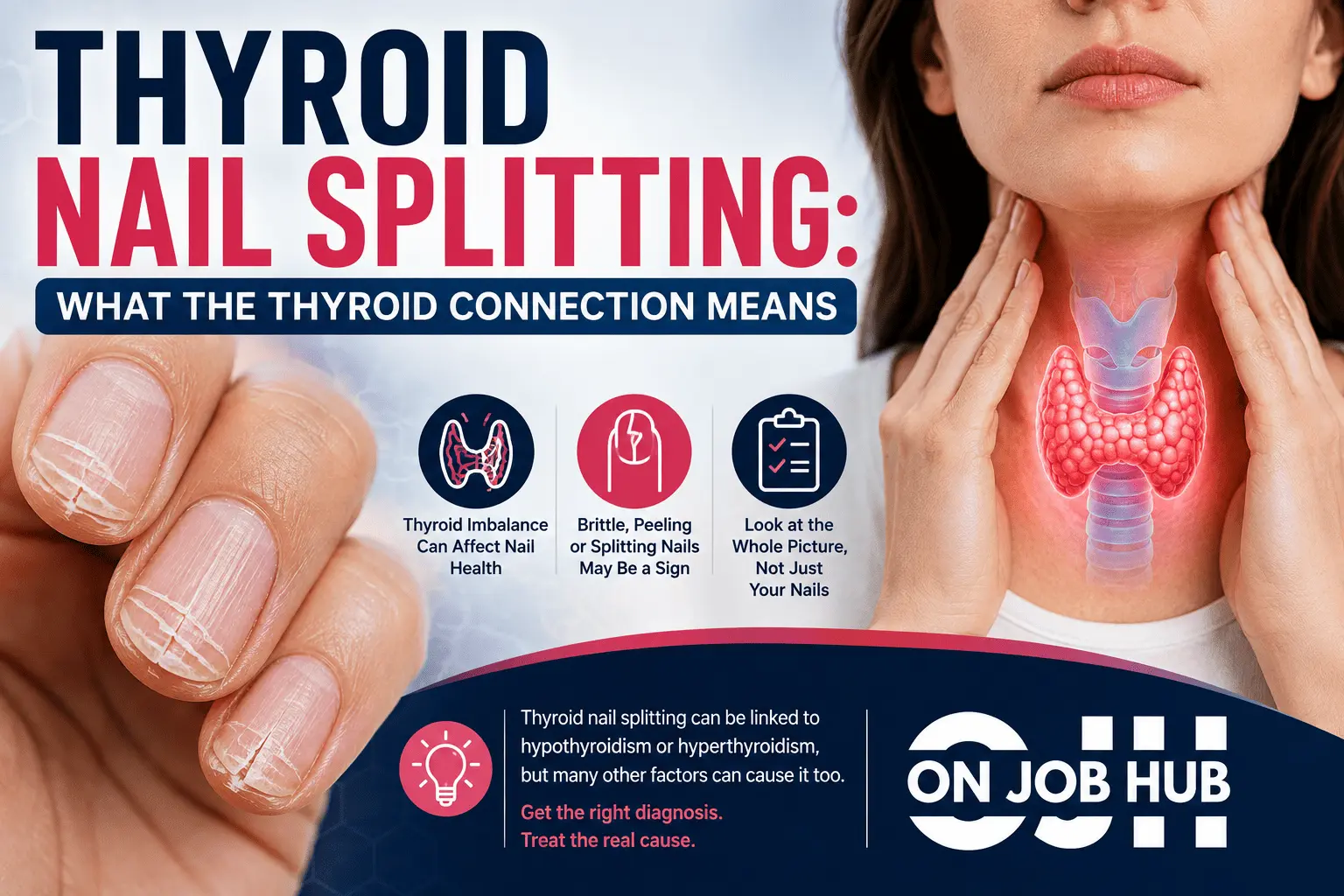
If your nails are splitting, peeling, or breaking more easily than they used to, you may wonder whether your thyroid could be involved. Thyroid problems can affect nail growth and texture, but thyroid nail splitting by itself does not point clearly to a thyroid disorder.
The question is whether the nail changes fit with other signs of thyroid dysfunction or have a more ordinary cause. Thyroid nail splitting can have several possible explanations.
Can Thyroid Problems Cause Nail Splitting?
Yes, thyroid dysfunction can be associated with brittle, fragile, peeling, or splitting nails. Changes in thyroid hormone levels can affect normal nail growth, so thyroid nail splitting may occur when the underlying thyroid problem persists.
But splitting nails is not a thyroid test. A nail that keeps cracking at the edge could be dealing with repeated water exposure, chemicals, manicures, picking, or simple physical damage instead. This means thyroid nail splitting should not be assumed from one damaged nail.
The pattern matters too. Nail changes that occur alongside other changes in the body may tell you more than an isolated split nail. A person with ongoing fatigue, unusual changes in weight or temperature sensitivity, for example, has a different picture from someone whose nails started peeling after frequent manicures.
That is why the nails are better treated as one clue rather than the answer itself. Thyroid nail splitting is more meaningful when considered with the rest of the person’s symptoms.
How Hypothyroidism Can Affect the Nails
Hypothyroidism can show up in the nails as dryness, brittleness, slower growth, or nails that break more easily. Thyroid nail splitting may be noticed when nails seem harder to grow out without splitting or cracking.
Thyroid hormones may play a role in normal nail growth and development. When thyroid hormone levels stay low over time, nail growth may slow and the nails may become more fragile. That gives a possible explanation for why thyroid nail splitting can persist when hypothyroidism is untreated or poorly controlled.
The nail changes also make more sense when they occur with other signs of hypothyroidism. Fatigue, feeling unusually cold, dry skin, or other changes can provide context that thyroid nail splitting alone cannot.
How Hyperthyroidism Can Affect the Nails
Hyperthyroidism can affect the nails in a different way. Nails may become thin, soft, or fragile with hyperthyroidism, while nail lifting can occur in some people. Thyroid nail splitting can therefore look different depending on the underlying thyroid condition.
That lifting is called onycholysis. It can make part of the nail look separated from the skin underneath, rather than simply cracked or split at the edge.
Nail changes that occur along with symptoms of an overactive thyroid are more informative than an isolated change in one nail. The nail itself does not tell you whether thyroid nail splitting is caused by hyperthyroidism.
What Else Can Cause Splitting Nails?
Thyroid problems are only one possible explanation for nails that keep splitting. Everyday damage is often much less complicated. Frequent exposure to water, cleaning chemicals, repeated manicures, picking, biting, or minor trauma can weaken the nail over time.
Iron deficiency and other nutritional problems can also contribute to brittle or fragile nails. Fungal infections, certain skin conditions, some medications, and normal changes with aging can also play a role. These causes can produce nail changes that look similar to thyroid nail splitting.
The same nail change can point to very different causes. If the splitting started after a change in nail care or repeated exposure to something that damages the nails, that local cause deserves attention before assuming the thyroid is responsible. In such cases, the pattern may have little to do with thyroid nail splitting.
Which Nail Changes Are More Worth Paying Attention To?
A nail that splits once after being bumped or overworked is not the same as a change that keeps coming back. Persistent peeling, repeated breakage, noticeable lifting, or a clear change in nail texture deserves more attention, especially when several nails are affected.
Color and growth changes can matter too. A nail that becomes unusually discolored, changes shape, or grows much differently than it used to is harder to dismiss as simple wear and tear.
The picture becomes more meaningful when nail changes show up alongside things such as fatigue, unexplained weight changes, unusual sensitivity to heat or cold, or changes in the skin or hair. Those details do not identify a thyroid problem by themselves, but they provide useful context alongside thyroid nail splitting.
Persistent nail changes are worth looking at as a health issue rather than treating them only as a cosmetic nuisance. The nails can provide a clue, but they cannot replace thyroid testing. This is important when evaluating possible thyroid nail splitting.
What Actually Helps When Thyroid Is Involved
If a thyroid disorder is contributing to the nail changes, treating the underlying thyroid problem is the main piece. Treating the underlying thyroid problem is more important than using a thyroid-specific cosmetic fix for the nail.
Nails also take time to recover. Even after the underlying issue is being managed, the damaged part of the nail has to grow out, so improvement may be gradual rather than something you see within a few days.
While that happens, basic protection can help. Keep repeated water exposure and harsh chemicals to a minimum, and avoid picking, biting, or other unnecessary trauma. Regular moisturizing can also help keep the nails and surrounding skin from becoming excessively dry.
Supplements are not an automatic answer. They make more sense when a deficiency has actually been identified rather than being added simply because the nails are brittle. If the nail changes continue despite basic nail care, discussing them with a healthcare professional may help identify the underlying cause.



2 thoughts on “Thyroid Nail Splitting: What the Thyroid Connection Means”