










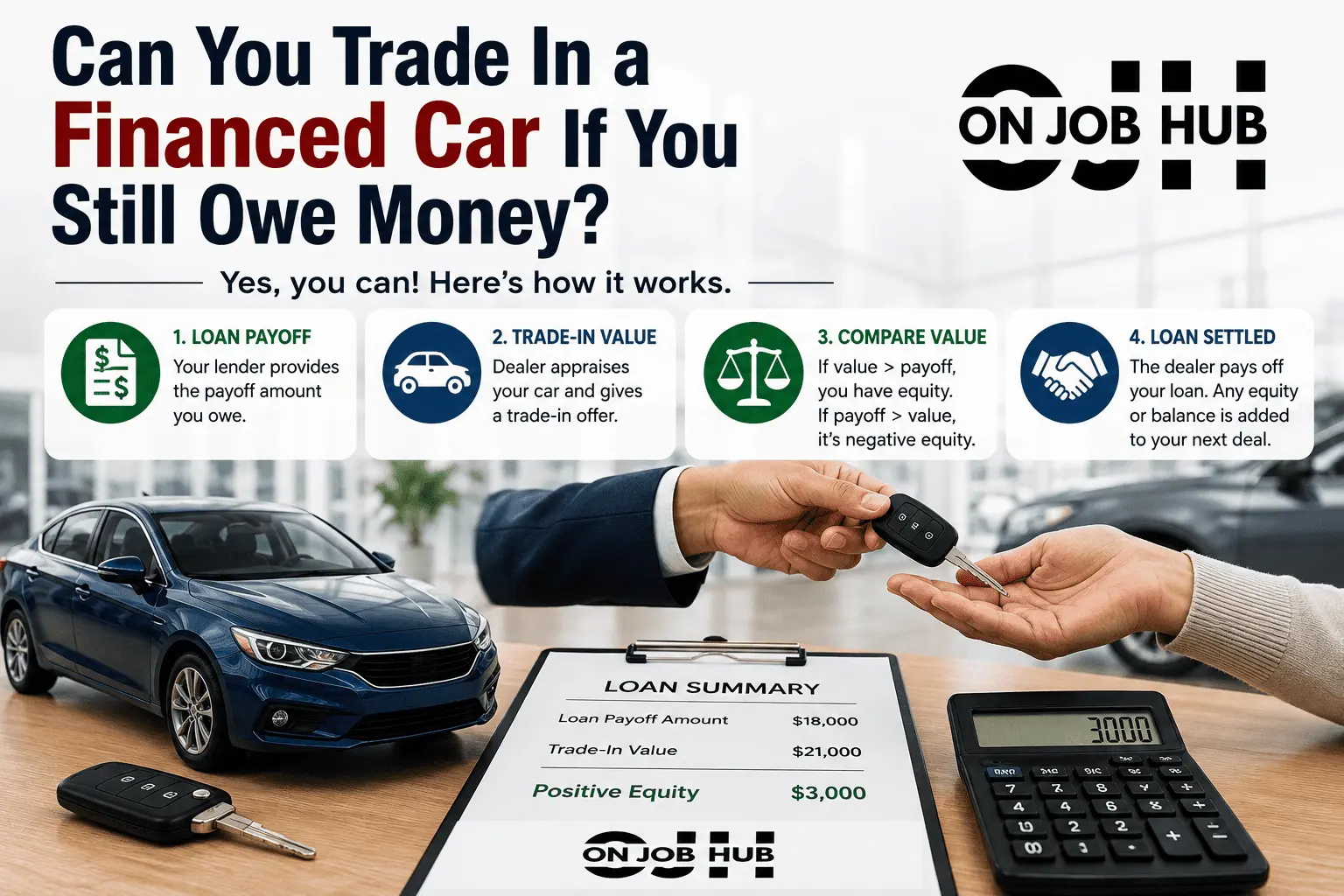
Can You Trade In a Financed Car if you still owe money on the loan? Yes, you generally can. The existing loan does not have to be fully paid off before you start the trade-in process, but the remaining payoff amount needs to be handled as part of the trade-in transaction.
The two numbers that matter first are your current loan payoff amount and what the car is worth as a trade-in. If the car is worth more than the payoff, you have positive equity. If you owe more than the car is worth, you have negative equity, and that difference has to be handled somehow.
The numbers help determine how the trade-in affects the deal and, if you’re buying another vehicle, how much you may need to finance.
Can I Trade In My Car While Still Making Payments?
If you’re still making payments on an auto loan, you can generally trade in the vehicle before the loan is fully paid off. An outstanding loan does not automatically prevent you from trading in the car. The dealer can typically work with your lender to obtain the current payoff amount and settle the existing loan as part of the transaction.
Trading in the car does not, by itself, erase what you owe. The old loan has to be settled, and the exact payoff amount matters because it may be different from the balance you see on your latest statement.
The dealer’s trade-in offer, the loan payoff, and financing for your next vehicle are separate numbers, and how they fit together depends on the terms of the deal and your equity position.
If you’re planning to trade in a financed vehicle soon, the timing itself is less important than where those numbers stand when you make the deal.
Check Your Loan Payoff and Trade-In Value
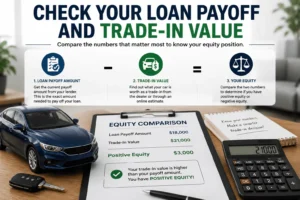
Start with the lender’s current payoff amount, not just the balance shown on your last statement. A payoff quote can account for interest or other amounts that make the actual figure different from what you expect.
Then get a realistic idea of what the car is worth as a trade-in. An online estimate can give you a rough range, while the trade-in amount used in the deal is the figure that matters for the transaction.
If you’re researching a financed car trade-in before visiting a dealer, put those two figures side by side. If the trade-in value is higher, you have positive equity. If the payoff is higher, you have negative equity.
For example, if the payoff is $18,000 and the dealer offers $21,000 for the car, you have $3,000 in positive equity.
When You Have Positive Equity
Positive equity means the car is worth more as a trade-in than the amount needed to pay off the loan. That difference represents the positive equity available in the trade-in.
If the car is worth $21,000 and the payoff is $18,000, the $3,000 difference can generally be applied toward the next vehicle. It can reduce how much you need to finance or otherwise become part of the deal’s value.
When You Have Negative Equity
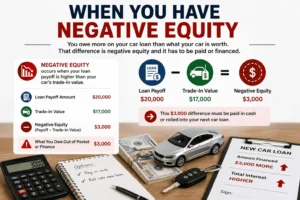
Negative equity means the payoff is higher than the car’s trade-in value. The gap does not disappear just because you trade the car.
Say the payoff is $20,000 but the dealer offers $17,000. You are $3,000 short. That $3,000 has to be accounted for.
You may be able to pay the difference in cash. Depending on the lender and deal, it may also be included in the financing for the next vehicle. Financing it means borrowing more, which can increase both the amount financed and the total interest you pay.
If you’re comparing options and trading in a financed car with negative equity, the important point is that the shortfall still has to be handled.
What Happens to the Remaining Loan During the Trade-In?
Understanding Can You Trade In a Financed Car requirements can help you avoid surprises when the old loan is being paid off.
Can You Trade In a Financed Car while the existing loan is still active? Yes, the old loan is paid off as part of the trade-in transaction. The dealer typically gets a payoff amount from your lender and uses the transaction funds to satisfy that payoff.
Before signing, make sure the paperwork shows the trade-in value and loan payoff separately. If there is negative equity, check exactly how much is being paid in cash and how much, if any, is being added to the new financing.
The final numbers should also show the new amount financed. Once the transaction is complete, confirm that the old lender received the required payoff and that the old loan account was closed.
Understanding this process is an important part of trading in a financed car without unexpectedly carrying old debt into a new deal.
When Does Trading In a Financed Car Make Sense?
Before deciding Can You Trade In a Financed Car, compare the loan payoff amount with the vehicle’s current trade-in value.
The trade-in decision starts with the numbers, not the payment the dealer puts in front of you. Car finance costs can also change depending on your equity position and the amount you need to borrow. Compare the car’s current value with the loan payoff and look at what that difference does to the transaction.
Positive equity generally gives you more room in the deal because the car is worth more than the amount needed to pay off the loan. Significant negative equity is different. If that shortfall gets added to a new loan, you are borrowing more before you have even accounted for the replacement vehicle.
A lower monthly payment can hide that difference. Check the total amount financed and the overall cost instead of judging the deal by the payment alone.
If you’re deciding whether a financed car trade-in makes financial sense, verify the payoff and trade-in numbers before agreeing to the deal.
If you’re interested in the broader finance field beyond auto loans, you can also explore our guide on how to get a job in finance as a career changer.
What to Check Before Signing the Trade-In Deal
Before completing Can You Trade In a Financed Car, check the exact loan payoff amount, including its validity date. A payoff figure can change, so the number on an older statement may not be the number being used for the transaction.
The written trade-in value and the agreed price of the vehicle you are buying should be clear separately. If there is negative equity, make sure the paperwork shows exactly how much is being paid in cash and how much, if any, is being added to the new loan.
If available, Trade-In Protection may provide additional coverage or protection related to the trade-in transaction, so review its specific terms before signing.
Look at the total amount financed and the resulting payment together. The payment by itself does not tell you what the new deal is costing.
Before you sign, confirm that the old lender’s payoff is being handled as agreed and that the old loan account will be closed.
Frequently Asked Questions
Can I Trade In My Car While Still Making Payments?
Yes, you can generally trade in your car while still making payments on an existing auto loan. The dealer will need to account for your current loan payoff amount and the vehicle’s trade-in value. If the car is worth more than the payoff, you may have positive equity. If you owe more than the car is worth, you have negative equity.
Can You Trade In a Financed Car If You Still Owe Money?
Yes. An active loan does not automatically prevent a trade-in. The existing loan simply needs to be accounted for and paid off as part of the transaction.
Do You Have to Pay Off Your Car Loan Before Trading It In?
No. You generally do not have to pay the loan off separately before starting the trade-in. The payoff can be handled as part of the transaction.
What Happens If Your Car Is Worth Less Than What You Owe?
The difference is negative equity. That amount has to be dealt with in the transaction rather than simply disappearing.
Can Negative Equity Be Rolled Into a New Car Loan?
It may be possible, depending on the deal and the new lender. If it is added to the new loan, the amount you finance increases.
Is It Better to Pay Negative Equity in Cash or Finance It?
Paying it in cash avoids adding that shortfall to the new loan, while financing it means borrowing more.
Can You Trade In a Financed Car Without Buying Another Car?
A trade-in generally involves applying the car’s value within another vehicle transaction, while selling the financed car separately is a different situation. The existing loan still needs to be settled. If you want to get rid of a financed vehicle without purchasing another one, you may need to consider a separate sale instead.
Does Trading In a Financed Car Affect Your Existing Loan?
The trade-in itself does not simply erase the loan. The lender needs to receive the agreed payoff, and the old loan account is generally closed after the lender processes the required payoff.
Key Considerations When Trading In a Financed Car
If you’re asking Can You Trade In a Financed Car, the answer is generally yes, but the loan payoff and vehicle value should be checked before completing the deal.
Can You Trade In a Financed Car if you still owe money? Yes, a financed car can generally be traded in while money is still owed, but the existing loan has to be settled. Start with the exact payoff amount and current trade-in value.
The key numbers are the car’s current trade-in value and the exact loan payoff amount. Their difference tells you whether you have positive or negative equity.
Before signing, make sure the trade-in value, payoff amount, any negative equity, and the new amount financed are clearly shown in the deal.