









It is easy to say what your goal is, but what must happen between today and the future you describe? This is the kind of question the Back Casting Room is designed to solve. In this guide, the term refers to a physical or virtual space in which a team conducts the well-known back casting exercise. Back casting starts with describing a future situation and going backward to outline the actions, milestones, partners, and other prerequisites that will make it happen.
What Is a Back Casting Room?
Unlike forecasting, in which we try to project the existing developments into the future, back casting starts with the description of the end state. The OECD explains that visioning and back casting consist of envisioning a desirable or undesirable future and going back from it in order to determine what actions need to be taken. As UNDP says, the back casting technique can be used for turning a future vision into a time-bound plan of actions, milestones, necessary resources, and partnerships.
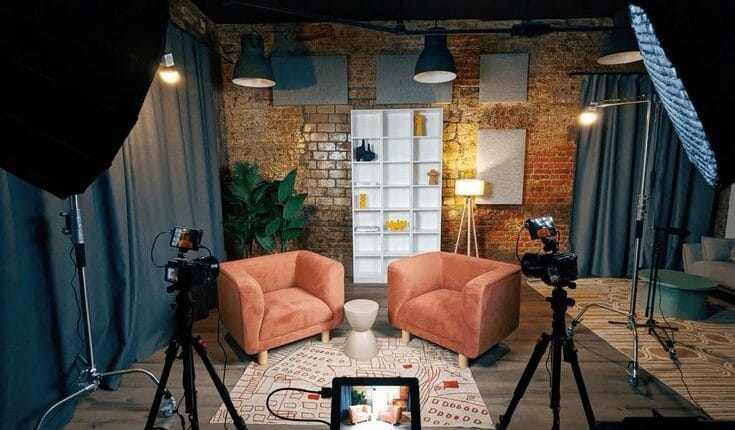
In the Back Casting Room, the process receives a concentrated environment. It may be any meeting room, used for conducting a half-day workshop, a permanent strategy room, or even a digital workspace in which the remote team works. But its goal is not to forecast anything. It is simply the decision of the future we would like to achieve.
Setup for the Back Casting Room
For a start, we need just one big working surface. It may be a whiteboard, covered with paper wall, a set of interconnected boards – whatever you like. If it is an online session, you will need a shared visual workspace. Put the description of the desired future at the far right (or top) corner, the current situation at the opposite corner, leaving enough space between them for milestones.
Make sure that the room is spacious enough and convenient for moving around. Provide sticky notes, thick markers, voting dots, a timer, and any documents with information that may be useful for achieving the goal. It may be a computer screen that can show the results of customer research, performance indicators, financial constraints, and different versions of possible futures. For a hybrid session, there must be a good camera and microphone to ensure participation of remote users.
As important as the furniture is the list of participants. You will need experts in strategy, operations, customers, finances, technology, and implementation. The European Commission advises us to collaborate with relevant actors for establishing long-term goals.
Tools Useful for Back Casting Room
The simplest tool is the reverse timeline. Starting with the target year, go backward through different milestones until you reach the present moment. At every milestone, ask what must be done at this moment.
Among other useful tools we can mention stakeholder maps, assumption logs, risk matrices, impact-effort grids, responsibility charts, and action plan templates.
Using digital whiteboard will allow remote teams to use online sticky notes, roadmaps, voting tools, and shared planning templates. But remember that digital tools must only organize the discussion but not replace the thinking process.
Steps of the Back Casting Room Process
Firstly, define your future outcome. “Becoming more sustainable” is not an example of an ambitious goal, while “operating with zero avoidable packaging waste by 2032” is.
Secondly, evaluate your current position. Describe the existing resources, capabilities, barriers, regulations, behaviors, and performance indicators. As explained by the European Commission, back casting consists of a combination of the desirable future end state with the evaluation of the current situation, its gaps, context, and needs.
Then go backward and define what must be done one year before the target date, three years before it, and so on until you reach the present day. Arrange the steps logically and define their dependencies on each other.
Next, assign ownerships, necessary resources, performance indicators, and deadlines. According to UNDP, back casting helps to align partners and timelines, establish priorities, and develop the roadmap of actions from an ambitious vision.
Finally, test the plan of actions. Ask what may fail, what assumptions are not confirmed, and what warning signs will require changes of the plan.
Best Practices
Create a challenging vision for the future but make sure that it is realistic. While you need to try to inspire participants to come up with something extraordinary during the idea generation stage, it is essential to take into account practical limitations while creating the road map. It is necessary to separate these two processes in order to avoid rejecting good ideas right away.
Write down all disagreements instead of seeking immediate consensus. Such differences in opinion might allow you to uncover some issues and unrealistic expectations. Base your decisions on facts and conclude each meeting with defined owners and actions.
The Back Casting Room should not be considered solely a brainstorming place. Regularly evaluate the process, challenge your assumptions, and review your accomplishments against your milestones. Back casting is especially helpful in establishing challenging goals since it provides you with guidance without any guarantee of predicting the future.
Conclusion
The Back Casting Room links the ambitious future with the practical actions. It requires the visible timeline, relevant participants, useful information, easy tools for collaboration, and a facilitator who keeps the discussion organized.
Defining our success first and planning backward, we can clarify the priorities, dependencies, responsibilities, and transform a distant vision into the actions we can start today.
Read More About: Back Casting Room